How to choose a social media marketing agency in the UK comes down to four checks. Look at platform fit, proof of results, reporting and contract terms. Pick an agency that knows your buyers’ platforms, shows leads or sales from social and follows UK ad rules.
This guide shows how to choose a social media marketing agency step by step, with 12 questions to ask. It also covers red flags, real 2026 costs, UK advertising rules and what good social media reporting looks like.
Key takeaways
- Decide whether you need organic content, paid social ads or both before you contact agencies.
- Judge agencies on leads, sales and cost per lead, not followers and likes.
- Keep your Facebook Page, Instagram, LinkedIn and ad accounts in your own business’s name.
- UK rules require paid and gifted influencer content to be clearly labelled as an ad.
- Organic social prices are rarely published, so compare quotes against the same written brief.
- Ad spend is always paid on top of the agency’s management fee.
Why social media marketing matters for UK businesses in 2026
Social media is now one of the biggest ad channels in the UK. IAB UK reports that UK social media ad spend rose 21% to £11.5bn in 2025. That is 28% of the UK digital ad market, and video made up 59% of social investment.
People also spend a lot of time there. Ofcom’s Online Nation 2025 found UK adults spend an average of four and a half hours online a day. Half of that time (51%) goes on services owned by Alphabet or Meta.
More spend also means more competition for attention. That is why the agency you choose matters as much as the platform.
How to choose a social media marketing agency: six steps
Follow these steps in order. Each one narrows your list before you spend time on proposals and pitches.
- Define your goal, such as leads, sales, hiring or brand awareness, and your budget.
- Choose organic, paid or both, and the platforms your buyers actually use.
- Shortlist three to five agencies with proof on those platforms.
- Check their proof and reporting, looking for business results rather than likes.
- Ask the 12 questions below and get key answers in writing.
- Check the contract and UK rules, including account ownership and ad labelling.
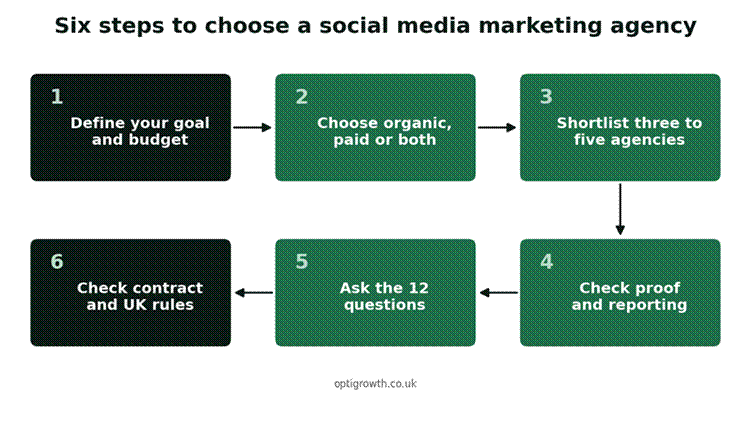
Figure 1: Six steps to choose a social media agency
Step 1: Decide what you need from social media
Knowing how to choose a social media agency starts with knowing what you need it for. Social media can do several jobs, and each needs different skills. Write down the main job before you speak to any agency.
| Main goal | What the agency should do | What to measure |
| Leads and enquiries | Paid social with lead forms or landing pages | Cost per lead and lead quality |
| Online sales | Paid social with product ads and retargeting | Sales and return on ad spend |
| B2B meetings | LinkedIn content, ads and outreach | Meetings booked and pipeline |
| Brand awareness | Organic content plus paid video reach | Reach in your target audience and branded searches |
| Hiring | Employer brand content and job ads | Applications and cost per hire |
Organic vs paid social: what is the difference?
| Organic social | Paid social | |
| What it is | Posts, videos and replies on your own accounts | Ads you pay platforms to show to chosen audiences |
| Best for | Trust, community and repeat customers | Leads, sales and reaching new people quickly |
| Speed | Slow to build | Fast to launch and test |
| How you pay | Agency time and content production | Agency fee plus your ad budget |
Many businesses need both, with organic building trust and paid ads bringing new people in. Our Meta ads agency team runs paid social, and our social media marketing team runs organic content.
Which platforms suit your business?
| Platform | Often suits | Typical content |
| Local services, community offers and older audiences | Posts, events, groups and lead form ads | |
| Visual products, hospitality, beauty and retail | Reels, carousels and stories | |
| B2B services, SaaS and recruitment | Founder posts, case studies and outreach | |
| TikTok | Consumer brands reaching younger audiences | Short, native video |
| YouTube | How-to content and longer product demos | Tutorials, reviews and Shorts |
Step 2: Shortlist UK social media marketing agencies
Search terms such as ‘social media agency’ or ‘marketing agency social media’ bring up a long list. Cut it to three to five agencies that work on your chosen platforms.
- Referrals: ask businesses like yours who runs their social media, and whether they would hire them again.
- The agency’s own channels: check how well they run their own accounts.
- Platform focus: a TikTok specialist and a LinkedIn specialist need different skills.
- Sector fit: look for work with businesses of your size, audience and budget.
- One team for organic and paid: this avoids two agencies blaming each other.
For a wider checklist on agencies in general, read our guide on how to choose a digital marketing agency.
Step 3: Check their proof and reporting
Many social media agencies lead with followers, likes and reach. Those numbers are easy to grow and hard to link to revenue.
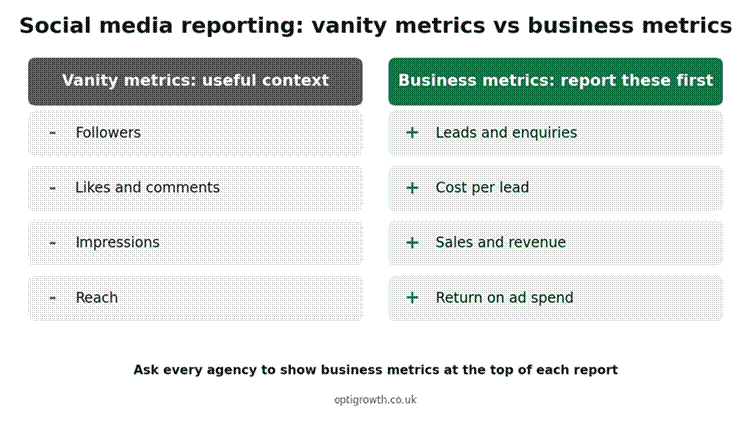
Figure 2: Ask for business metrics, not just vanity metrics
| Proof to ask for | What good looks like |
| Case studies | The platform, timeframe, budget and business result, with context |
| Sample report | Leads, sales or cost per lead shown before likes and reach |
| Live examples | Links to accounts they run now, with the client’s permission |
| References | Two current clients you can call |
| Company details | A real registered business you can check |
Check the agency on Companies House, where basic company details are free. Read reviews with care too: the CMA’s fake reviews guidance covers fake and undisclosed incentivised reviews.
Step 4: Ask these 12 questions before you sign
Ask every agency on your shortlist the same questions. Clear, specific answers in writing are a good sign.
| Question | What a good answer sounds like |
| 1. Which platforms do you recommend for us, and why? | A reason based on your buyers, not the agency’s favourite platform |
| 2. Who creates the content and who runs the account each day? | Named people and roles, including any freelancers |
| 3. What results have you delivered for businesses like ours? | Leads, sales or cost per lead, with timeframes |
| 4. How do you split organic and paid social? | A plan for both, or a clear reason to focus on one |
| 5. What do you report, and how often? | Business metrics first, at least monthly |
| 6. How do you track leads or sales from social? | UTM links, pixel or conversions set-up, and CRM checks |
| 7. Will our accounts stay in our name? | Yes, with the agency given partner access |
| 8. Who approves posts and ads before they go live? | A clear sign-off process you control |
| 9. How do you handle influencer content and ad labels? | Written labelling rules in line with ASA and CMA guidance |
| 10. Who replies to comments, messages and complaints? | Agreed response times and escalation to you |
| 11. What does the fee include, and is ad spend separate? | A written scope, with ad spend paid on top |
| 12. What is the minimum term and notice period? | Clear terms in the contract that you can live with |
UK rules your social media agency must know
Social media marketing in the UK has clear rules. Your agency should know them, but your business stays responsible for what is posted on its behalf.
Labelling ads and influencer content
The ASA says Section 2 of the CAP Code requires marketing to be obviously identifiable as marketing. It prefers labels such as ‘Ad’, and advises against vague words such as ‘sponsored’ or ‘aff’.
Content counts as an ad when a brand gives a creator payment or any other incentive, including gifts. Posts with affiliate links or codes count too. The ASA says both brands and influencers are responsible for making ads obvious.
The CMA’s guidance for brands says businesses must take responsibility for labelling paid-for endorsements. It also says you should check content about your brand yourself, and not ignore posts that are wrongly labelled.
Your own posts, reviews and messages
- Your own posts are marketing. The CAP Code covers marketing on your own website and social accounts, so claims need evidence.
- No fake reviews. Never post, buy or swap reviews, or hide incentives behind them.
- DMs follow email rules. The ICO says direct messages on social media count as electronic mail under PECR.
- Consent for individuals. Marketing messages to individuals usually need consent, as the ICO’s small business guidance explains.
| Rule | What it means for your agency | Source |
| Ads must be identifiable | Label paid, gifted and affiliate content clearly as an ad | ASA and CMA guidance |
| Claims need evidence | Every claim on your accounts must be honest and provable | CAP Code |
| No fake reviews | No fake, bought or hidden-incentive reviews | CMA208 |
| DMs are electronic mail | Marketing DMs to individuals need consent | ICO |
Red flags when hiring a social media agency
- Guaranteed followers or viral posts. No agency controls what platforms show or what people share.
- Buying followers or engagement. Fake numbers make your reports useless and can harm your accounts.
- Accounts set up in the agency’s name. You could lose your audience and ad history if you leave.
- Reports with only likes and reach, and nothing on leads, sales or cost per lead.
- No approval process for posts, ads or replies to complaints.
- No plan for ad labels when they work with influencers.
- The same post on every platform, with no change in format or message.
- Long lock-in terms with no review point or way out.
How much does a social media marketing agency cost in the UK?
ExpertSure’s UK pricing guide, updated in October 2026, uses agencies’ own published prices. It found that organic social media is usually quoted individually, per brief. Price depends on the number of platforms and posts, and content and social retainers are rarely published at all.
Paid social follows the PPC model: a management fee plus your ad budget. ExpertSure notes that PPC and paid social fees never include the media budget.
| Monthly budget | What it usually buys (ExpertSure) |
| Under £500 | One channel, done properly |
| £500 to £2,000 | A full retainer or two channels |
| £2,000 and above | Multi-channel and specialist work |
UK agencies usually quote excluding VAT, so expect 20% on top if they are VAT-registered. ExpertSure also found most agencies that publish terms roll monthly, with 30 or 31 days’ notice.
What changes the price of a social media agency
- The number of platforms and posts each week.
- How much video and design work is needed.
- Hours of community management, such as replies to comments and messages.
- Whether paid social is included, and the size of the ad budget.
- How detailed the reporting and tracking need to be.
Because prices are rarely published, send the same written brief to every agency. That way you can compare like with like.
What good social media reporting looks like
A good monthly report starts with business results, then explains the activity behind them. Ask to see a sample report before you sign.
| Report section | What it should show |
| Results | Leads, sales, cost per lead and return on ad spend |
| Audience quality | Whether the right people engaged, such as job titles or locations |
| Content performance | Which posts and ads worked best, and why |
| Spend | Ad spend by platform and campaign |
| Next steps | What will change next month, based on the data |
Tracking makes this possible. Our CRM and call tracking service links social leads to sales, and our marketing attribution guide explains the method.
What to expect in the first 90 days
| Period | What should happen | What you should see |
| Days 1 to 30 | Account access, audit, tracking set-up and a content plan | A written plan and agreed targets |
| Days 31 to 60 | Content and ads go live, with early tests | A first monthly report with business metrics |
| Days 61 to 90 | Keep what works, cut what does not | A review against the targets you agreed |
Paid social can bring data within weeks. Organic growth takes longer, so judge it on trends over several months.
What good proof looks like: an example
Here is the level of detail to expect, using one of our own social selling campaigns on LinkedIn. It names the client, the platform, the timeframe and the results.
| Detail | Innovent LinkedIn outreach |
| Client | A software development and digital transformation company |
| Platform and method | LinkedIn outreach to CEOs, CTOs, founders and technology directors |
| Timeframe | Six months |
| Results | 4,500+ prospects reached, 38% connection acceptance, 22% response rate and 87 discovery calls booked |
Innovent sells mainly outside the UK, so treat these figures as proof of the method. Our LinkedIn lead generation guide explains how it works, and our work page shows more results.
Common mistakes when choosing a social media agency
- Choosing on design alone, without asking about results.
- Hiring for every platform at once instead of the two that matter most.
- Accepting reports full of likes and reach.
- Letting the agency own your accounts or ad accounts.
- Skipping a clear approval process for posts and ads.
- Forgetting ad labelling rules when working with influencers.
FAQs: how to choose a social media marketing agency
How do I choose a social media marketing agency?
Start with one goal and decide whether you need organic content, paid ads or both. Shortlist three to five agencies with proof on your platforms, and ask each the same questions. Check their reporting, account ownership terms and knowledge of UK ad labelling rules.
How much does a social media agency cost in the UK?
ExpertSure’s October 2026 guide found organic social media is usually quoted individually, based on platforms and posts. Paid social is a management fee plus your ad budget. Its overall bands run from under £500 a month for one channel to £2,000+ for multi-channel work.
Should I hire a social media agency or a freelancer?
A freelancer suits one platform or one skill, such as content creation. An agency suits several platforms, paid and organic together, or when you need holiday cover and reporting. Either way, check proof, references and who owns the accounts.
What should a social media agency report each month?
A good report starts with leads, sales, cost per lead and return on ad spend. It then shows which posts and ads worked, spend by platform and the plan for next month. Likes and reach are useful context, not the main result.
Do social media ads and influencer posts need labels in the UK?
Yes, the ASA says marketing must be obviously identifiable, and it prefers labels such as ‘Ad’. Paid, gifted and affiliate content all count as advertising. The CMA also says brands must take responsibility for labelling the endorsements they pay for or reward.
Who should own my social media accounts?
Your business should own its Pages, profiles and ad accounts, with the agency given partner access. That way, your audience, content and ad history stay with you if you change agency. Make ownership and partner access a written term in the contract.
How long does social media marketing take to work?
Paid social can produce leads and useful data within weeks of launch. Organic social builds more slowly, so judge it on trends over several months. Agree targets at the start, review progress monthly and make a full review at day 90.
Talk to OptiGrowth about social media marketing
OptiGrowth is a digital marketing agency based in Manchester. Our social media marketing team runs organic content and paid social measured against leads and sales.
Now you know how to choose a social media marketing agency, put us through the 12 questions above. Our free marketing audit includes a 30-minute strategy call and a 90-day growth roadmap, with no obligation.
If you would rather talk first, contact our team directly.