Influencer marketing in the UK means paying or rewarding creators to promote your products to their followers. In 2026, influencer marketing UK campaigns work best when you pick creators for audience fit. Label every post as an ad, and track leads or sales for each creator.
This influencer marketing UK guide is written for brand owners and marketing managers. It covers 2026 market data, a seven-step strategy, ASA and CMA rules, costs, contracts and how to measure return.
Key takeaways
- UK creator partnership revenue reached £966m in 2025 and is forecast to pass £1bn in 2026.
- Paid, gifted and affiliate posts are all ads, and the ASA prefers the label ‘Ad’ at the start.
- Brands share responsibility for labelling, and the CMA can now fine businesses directly.
- Choose creators by audience fit and past results, not follower count.
- Agree usage rights in writing before you run creator content as paid ads.
Give every creator a unique link or code so you can track leads and sales.
What is influencer marketing?
Influencer marketing is a form of advertising where a brand works with a creator who has a trusted audience. The creator makes content about the brand and shares it with their followers. In return, they get a fee, free products, commission or another benefit.
UK regulators treat a post as advertising when the creator gets a payment or other incentive from the brand. That is why labelling rules sit at the centre of every UK campaign.
Types of influencer partnership
| Partnership type | How it works | Is it an ad in the UK? |
| Paid post or video | You pay a fee for agreed content | Yes |
| Gifting | You send free products, trips or event invites | Yes, the ASA counts gifts as an incentive |
| Affiliate or commission | The creator earns money from a link or code | Yes, the ASA treats affiliate content as advertising |
| Brand ambassador | A longer deal across several months | Yes, and related posts outside the contract can count too |
| Creator content run as ads | You pay to show a creator’s post to a wider audience | Yes, it is a paid ad |
| UGC for your own channels | A creator makes content that you post on your accounts | It is your own marketing, so normal ad rules apply |
UGC means user-generated content. Creators are also grouped by audience size, from nano (1,000 to 10,000 followers) to mega (1 million+). The cost section below shows typical UK rates for each tier.
Influencer marketing UK: the numbers for 2026
Influencer marketing UK spend is growing faster than the rest of digital advertising. IAB UK’s first study of UK creator partnerships, run with IRM, was reported by Marketing Week in September 2026.
- £966m: UK creator partnership revenue in 2025, up 20.1% from £804m in 2024.
- £1.217bn: the forecast for 2026, a 26% rise that would pass £1bn for the first time.
- More than twice as fast: 2025 growth beat the 9.6% recorded for digital advertising excluding creator partnerships.
- 93%: the share of UK brands and agencies in Kolsquare’s 2026/2027 outlook that expect to raise influencer spend.
These figures cover payments for creator partnerships. They do not include the paid media that brands spend to amplify creator content.
More spend also brings closer checks. The ASA published new research on how people recognise influencer ads in February 2026. Its current advice on ads in social media is dated 6 August 2026.
How to build an influencer marketing strategy in seven steps
A good influencer marketing strategy starts with the result you want, not the creator you like. Follow these seven steps in order.
- Set one goal and the number that proves it.
- Define the audience you need to reach.
- Pick the platforms where that audience spends time.
- Find and vet creators for audience fit and trust.
- Brief and contract each creator in writing.
- Launch, label and amplify the content.
- Track and report leads, sales and cost per result.
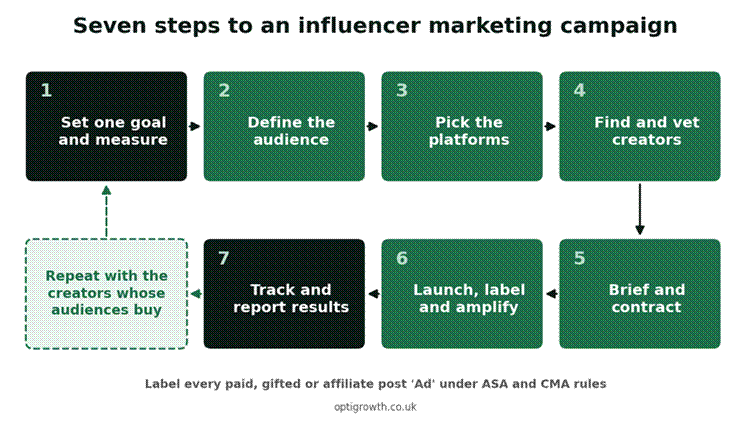
Figure 1: Seven steps to an influencer marketing campaign
Step 1: Set one goal and one measure
Influencer content can build awareness, drive sales or bring in leads. Each goal needs a different creator, format and measure.
| Goal | Format that suits it | Main measure |
| Brand awareness | Short video on TikTok, Instagram Reels or YouTube Shorts | Reach within your target audience |
| Online sales | Product demos with a code or affiliate link | Sales and cost per sale |
| Leads or sign-ups | Content that sends people to a landing page or form | Leads and cost per qualified lead |
| Content for ads | Creator videos licensed for paid social | Ad results compared with your own creative |
| B2B trust | LinkedIn posts, podcasts or webinars with industry experts | Meetings booked and pipeline |
Step 2: Define the audience you need
Write down who you need to reach by age, location, interests and buying stage. For a UK brand, most of the creator’s audience should be in the UK.
Ask every creator for audience data from their platform insights. Screenshots of age, gender and country splits are a fair request before you agree a fee.
Step 3: Pick the platforms
| Platform | Often suits | Content that works |
| Fashion, beauty, food, travel and home | Reels, Stories and carousels | |
| TikTok | Consumer brands with younger audiences | Short, native video |
| YouTube | Tech, finance, education and longer reviews | Reviews, tutorials and Shorts |
| B2B services, SaaS and recruitment | Expert posts, documents and live events | |
| Podcasts | B2B and niche topics | Host-read ads and guest spots |
Step 4: Find and vet creators
Follower count is the weakest signal of value. Look at who follows the creator and how those people react.
- Audience fit: the share of followers in the UK and in your target age group.
- Engagement quality: real comments and questions, not just emojis or generic praise.
- Past brand work: whether earlier ads were clearly labelled, and how many brands they promote.
- Brand safety: past posts that clash with your values, or claims you could not support.
- Results: link clicks, code use or sales from past campaigns, if the creator will share them.
Also check the ASA’s list of non-compliant social media influencers before you sign anyone. It names creators who have routinely failed to label their ads clearly.
Step 5: Brief and contract each creator
The CMA’s guidance for brands says you should have a policy that requires creators to label all ads. The contract is the easiest place to put that policy in writing.
Cover these points in every brief and contract:
- Deliverables: the number of posts, formats, platforms and dates.
- Label wording: ‘Ad’ at the start of the caption, and on screen at the start of videos.
- Approval: who checks content and product claims before they go live.
- Usage rights: where, for how long and in which ads you can reuse the content.
- Exclusivity: whether the creator can work with competitors, and for how long.
- Payment: fee, commission, product value and payment dates.
- Corrections: a duty to fix or remove posts if labels or claims are wrong.
Usage rights matter most if you plan to run creator videos as ads. UK copyright protection is automatic, and a sale of copyright needs a written, signed document. The other route is a licence, so agree the period, channels and paid use in writing.
Step 6: Launch, label and amplify
Check that every post goes live with the agreed label, link and code. Save a screenshot of each one for your records.
Strong creator posts can then run as paid ads to reach more of your audience. TikTok calls this format Spark Ads, and it needs the creator’s authorisation. Our Meta ads agency team runs creator content as ads on Instagram and Facebook.
Send traffic to a landing page that matches the creator’s offer, with one clear form or button. Our conversion rate optimisation team can build and test these pages.
Step 7: Track and report results
Give every creator a unique tracking link and discount code. That way, you can see clicks, leads and sales for each person.
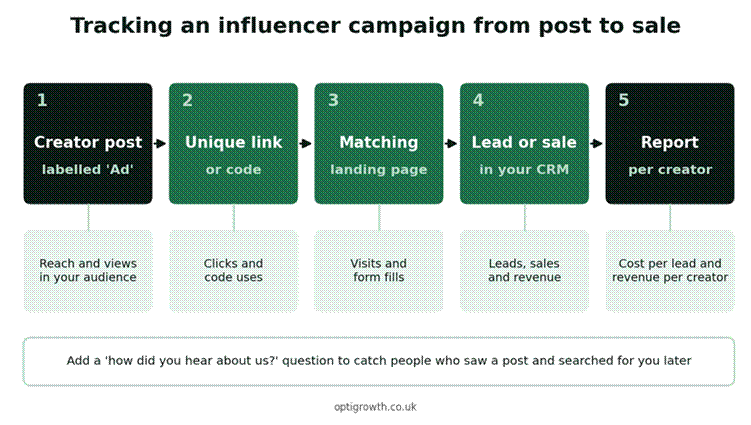
Figure 2: Tracking an influencer campaign from post to sale
- UTM links: tag each creator’s link with source, medium and campaign names for Google Analytics 4.
- Unique codes: count sales from people who heard about you through the creator but did not click.
- A CRM field: record the creator’s name against each lead, so you can follow it to a sale.
- A ‘how did you hear about us’ question: catches people who saw a post and searched for you later.
For long B2B sales cycles, read our guide to B2B marketing attribution. Our CRM and call tracking service can set up the fields and reports.
UK influencer marketing rules: ASA, CMA and the DMCC Act
Two bodies police influencer marketing in the UK. The ASA enforces the CAP Code, and the CMA enforces consumer protection law.
When is a post an ad?
A post is advertising when the creator has received a payment or any other incentive from the brand. The ASA says this includes incentives that were ‘requested or unsolicited’. A personal or commercial connection to the brand also counts.
Once that link exists, any content featuring or referring to the brand must be obviously identifiable as advertising. That runs from a post about a gifted product to a full brand collaboration.
- Paid posts and videos: always ads.
- Gifted products, trips and event invites: count as an incentive.
- Affiliate links and codes that pay commission: count as advertising.
- Ambassadors: related posts can count even when the contract does not cover them.
How to label influencer ads
The ASA and CMA prefer labels that clearly say a post is advertising, such as ‘Ad’. The ASA’s August 2026 advice sets out which labels are likely to work.
| Label | Likely to be acceptable? |
| Ad, Advert, Advertising, Ad feature | Yes |
| #ad, if prominent and separate from other text | Yes, the hashtag itself is optional |
| Instagram ‘Paid partnership’ tool | May be enough if upfront, clear and prominent |
| Sponsored | Not advised, as people read it in different ways |
| Gifted, Supported by, Funded by, In association with | Unlikely to be clear enough |
| aff, sp, spon | Unlikely to be clear enough |
Placement matters as much as wording. People must see the label before they engage. A label that only appears after ‘See more’ is not acceptable.
For video, make the commercial intent clear before people watch, where possible. On YouTube, the title or thumbnail needs a label such as ‘Ad’ at minimum.
The ASA’s research from February 2026 shows why this matters. Many people feel confident spotting influencer ads, but that confidence does not always mean they recognise them.
What brands must do
Both brands and influencers are responsible for making sure ads are obviously identifiable. The CMA’s guidance for brands sets out what that means in practice.
- Have a written policy that requires creators to label all ads in line with ASA and CMA guidance.
- Check posts that mention your brand yourself, rather than relying on the creator.
- Act quickly to correct posts that are not labelled properly.
- Make sure any agency or talent manager you use also understands the rules.
- Stop using creators who keep failing to label, as the CMA says you are at risk if you continue.
Creators have their own CMA guidance, so link to it in your brief.
What happens if you get it wrong
ASA rulings name both the brand and the creator. In October 2023, the ASA upheld complaints about a post by Lydia Millen at The Savoy. It told the hotel’s operator, Accor (UK) Ltd, and the influencer to use ‘#ad’ at a minimum.
The post sat outside the agreed content in her ambassador deal. The ASA still found it was an ad because of its close link to that ongoing commercial relationship.
The CMA’s risk is financial, because since 6 April 2025 it can enforce consumer law directly. That power comes from the Digital Markets, Competition and Consumers Act 2024 (DMCC Act). Penalties can reach 10% of global turnover or £300,000, whichever is greater.
The ASA says its influencer guide will be updated to reflect the Act’s unfair commercial practices rules. It adds that the current advice remains broadly correct.
Extra rules for food, finance and gambling brands
| Sector | Rule | What it means for influencer work |
| Less healthy food and drink | Paid-for online ads for these products restricted UK-wide since 5 January 2026 | The ASA says the rule can cover influencer content that meets the payment test, and gifting can count as payment |
| Financial services | FCA guidance FG24/1 on financial promotions on social media | Influencers who promote regulated products without approval from an FCA-authorised firm may commit a criminal offence |
| Gambling | Since 1 October 2022, gambling ads must not have strong appeal to under-18s | This covers ads using sports stars, celebrities and social media personalities popular with young people |
Sources: GOV.UK and the ASA on less healthy food, FCA FG24/1 and the ASA’s gambling rules. Some exemptions apply to food and drink SMEs, so check the ASA advice before you plan a campaign.
Giveaways and lead data
Creator giveaways are a common way to collect leads. The ICO says consent given for a prize draw covers only that prize draw.
To email entrants afterwards, ask for separate marketing consent on the entry form. Our email marketing team builds the follow-up sequences that turn entrants into customers.
How much does influencer marketing cost in the UK?
UK influencer marketing costs depend on audience size, format, usage rights and timing. Awin’s January 2026 guide gives these UK ranges per post, based on benchmarks from several sources.
| Tier | Followers | Typical UK rate per post |
| Nano | 1,000 to 10,000 | £100 to £350 |
| Micro | 10,000 to 100,000 | £350 to £1,000 |
| Mid-tier | 100,000 to 500,000 | £1,000 to £5,000 |
| Macro | 500,000 to 1 million | £5,000 to £12,000 |
| Mega | 1 million+ | £12,000 to £20,000 |
Treat these as starting points, not price lists. Short-form video, busy categories such as beauty and fashion, and peaks such as Black Friday all push fees up.
Common pricing models
- Fixed fee: a set rate per post or package.
- Performance-based: payment linked to results, such as sales or cost per acquisition.
- Hybrid: a flat fee plus a bonus when the creator hits agreed targets.
- Affiliate commission: a pre-agreed share of each sale made through the creator’s link or code.
- Gifting only: free products, which still count as an incentive under UK rules.
Costs on top of creator fees
- Usage rights: reusing content in paid social, email or on your website can raise the fee.
- Paid amplification: the ad budget to run creator content as ads.
- Product and shipping: the cost of the items you send.
- Agency fees: Awin cites the Marketing Agency Index at around £500 to £20,000 per campaign.
- Tracking and landing pages: set-up time for links, codes and forms.
How to measure influencer marketing ROI
Measure UK influencer marketing like any other paid channel. Count the full cost, track results per creator and compare cost per result with your other channels.
| Stage | What to track | Where to find it |
| Reach | Views and reach among your target audience | The creator’s platform insights |
| Interest | Link clicks, saves, shares and comments with questions | Creator insights and Google Analytics 4 |
| Action | Leads, sign-ups, code redemptions and sales | Your website, shop or CRM |
| Value | Revenue, cost per lead and cost per sale | CRM and finance data |
| Influencer marketing ROI formula ROI = (revenue from the campaign minus total cost) divided by total cost. Total cost includes creator fees, products, usage rights, ad spend, agency time and production. |
Some sales will never show up in links or codes. A ‘how did you hear about us’ question and changes in branded searches help fill that gap.
Influencer marketing for B2B and SaaS brands
Influencer marketing is not only for consumer brands. B2B buyers also follow people they trust, such as industry experts, analysts, podcast hosts and founders.
- LinkedIn creators who post about your buyers’ problems.
- Podcast hosts in your niche, for host-read ads or guest spots.
- YouTube reviewers who demo software or equipment.
- Your own experts, such as founders and engineers, posting from their own profiles.
- Webinar partners who co-host sessions with your team.
Measure B2B creator work by meetings booked and pipeline, not views. The same labelling rules apply when a creator is paid or rewarded. The ASA also counts commercial connections, so staff should make clear they work for you.
Our B2B marketing agency and SaaS marketing teams plan creator work alongside search and LinkedIn. For direct outreach, see our LinkedIn lead generation guide.
Should you use a UK influencer agency, a platform or run it in-house?
There are three common ways to run influencer marketing in the UK. The right one depends on your budget, team time and how many creators you need.
| Option | Best for | Watch out for |
| In-house | Small programmes with a few creators | Time spent on outreach, contracts, checks and reporting |
| Influencer platform | Teams that want search tools and will run campaigns themselves | Software fees, and your team still does the work |
| UK influencer agency | Brands that want strategy, sourcing, contracts and reporting handled | Agencies that report reach but not leads or sales |
Whichever you choose, keep creator contracts, content licences and ad accounts in your business’s name. Ask any agency how it handles ASA and CMA labelling, and who checks each post.
For a wider checklist, read how to choose a social media marketing agency. It includes 12 questions to ask any agency.
Common influencer marketing mistakes
- Choosing by follower count. A large audience in the wrong country or age group wastes budget.
- No label or a weak label. ‘Gifted’ or ‘sponsored’ on its own is unlikely to be enough.
- No usage rights. Running a creator’s video as an ad without a licence invites a dispute.
- No tracking. Without links, codes and CRM fields, you cannot prove return.
- One-off posts only. Test several creators, then keep the ones whose audiences buy.
- Ignoring sector rules. Food, finance and gambling brands face extra restrictions.
Influencer marketing UK FAQs
What is influencer marketing in the UK?
Influencer marketing in the UK is when a brand pays or rewards creators to promote its products. The reward can be a fee, free products, commission or another benefit. UK rules treat this content as advertising, so it must be clearly labelled as an ad.
How much do influencers charge in the UK?
Awin’s 2026 guide puts nano creators at £100 to £350 a post and micro creators at £350 to £1,000. Mid-tier creators charge £1,000 to £5,000, and mega creators £12,000 to £20,000. Usage rights, video formats and peak seasons can raise fees.
Do influencers have to use #ad in the UK?
Paid, gifted and affiliate content must be obviously identifiable as advertising. The ASA prefers a clear ‘Ad’ label at the start of a post, though a prominent ‘#ad’ works too. Labels such as ‘sponsored’, ‘gifted’ or ‘aff’ on their own are unlikely to be clear enough.
Is a gifted product an ad?
Yes, the ASA counts gifts as an incentive, whether the creator asked for them or not. Once that link exists, posts featuring the brand need a clear ad label. The word ‘gifted’ on its own is unlikely to be clear enough.
Who is responsible if an influencer does not label an ad?
Both the brand and the influencer are responsible for making ads obviously identifiable. The CMA expects brands to set a labelling policy, check posts and correct problems quickly. Since April 2025, the CMA can fine businesses up to 10% of global turnover or £300,000, whichever is greater.
Are micro-influencers better than big influencers?
It depends on your goal and audience. Micro-influencers cost less per post, so you can test several creators for the price of one larger one. Larger creators reach more people in a single post, which can suit awareness campaigns.
How do you measure influencer marketing ROI?
Give each creator a unique link and code, then track clicks, leads and sales in GA4 and your CRM. Add up the full cost, including fees, products, usage rights and ad spend. ROI is campaign revenue minus total cost, divided by total cost.
Can B2B companies use influencer marketing?
Yes, B2B brands can work with LinkedIn creators, podcast hosts, industry analysts and YouTube reviewers. Measure the work by meetings booked and pipeline rather than views. Paid or rewarded B2B content still needs a clear ad label under UK rules.
Plan your influencer campaign with OptiGrowth
OptiGrowth is a digital marketing agency based in Manchester. Our influencer marketing agency team handles creator sourcing, contracts and compliance, creator ads, UGC and ROI tracking.
We match creators on audience, not follower count. We also track each lead or sale back to the creator who drove it. Our social media marketing team can run your organic channels alongside it.
Book a free marketing audit for a 30-minute strategy call and a 90-day growth roadmap, with no obligation. Or contact our team to talk through your next campaign.