How to choose a digital marketing agency in the UK comes down to five checks. Look at fit, proof, the people on your account, reporting and contract terms. Start with one clear goal, as the best SEO agency may not be the best for paid social.
This guide shows how to choose a digital marketing agency step by step, with 15 questions to ask. It also covers red flags, real 2026 UK costs, contract and data checks, and a scorecard for your shortlist.
How to choose a digital marketing agency: the six-step process
Follow these six steps in order. Each one removes agencies that are a poor fit before you spend time on proposals.
- Define your goal and budget, so you can judge every agency against the same brief.
- Build a shortlist of three to five agencies with proof in your channel.
- Check their proof, including case studies, references, reviews and company records.
- Ask the 15 questions below, and get the key answers in writing.
- Score each agency and check the contract, including ownership and data terms.
- Start with a 90-day plan and agreed measures of success.
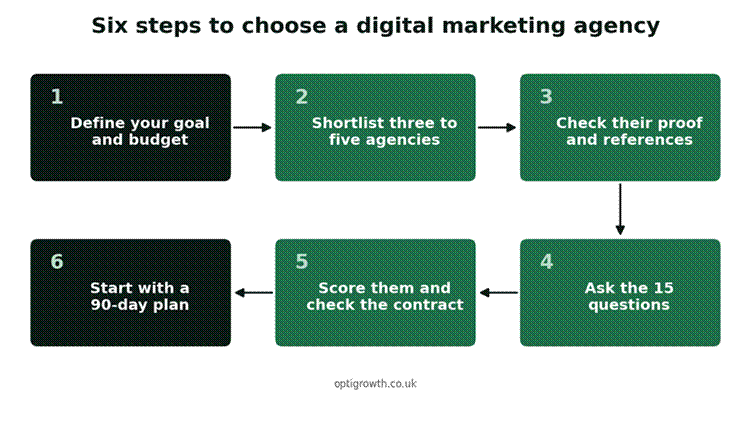
Figure 1: Six steps to choose the right agency
Step 1: Decide what you need before you search
Most poor agency choices start with an unclear brief. Before you contact anyone, write down your main goal, your monthly budget and how you will measure success.
| Your main goal | Services to look for | What to measure |
| More enquiries from Google over time | SEO and content | Organic enquiries and cost per lead |
| Leads within weeks | Google Ads or paid social | Cost per lead and lead quality |
| Meetings with named B2B buyers | LinkedIn outreach and account-based campaigns | Meetings booked and pipeline |
| More sales from your current traffic | Conversion rate optimisation | Conversion rate and revenue per visit |
| Knowing which channel works | Tracking, CRM and reporting set-up | Leads and deals by source |
Not sure which channel to start with? Our guide to Google Ads vs SEO compares the two most common first choices.
Agency, freelancer or in-house team?
An agency is not always the right answer. The table below shows where each option tends to fit best.
| Option | Works best when | Watch out for |
| Digital marketing agency | You need several skills, such as strategy, ads, SEO and tracking | Junior staff doing the work after a senior pitch |
| Freelancer | You need one skill for a defined project | Holiday cover, capacity and limited range |
| In-house marketer | You need daily work on the brand and close team contact | Hiring time and one person covering many skills |
| Hybrid | You have an in-house lead but need specialist help | Unclear ownership of tasks and results |
Step 2: Build a shortlist of UK marketing agencies
A search for ‘digital marketing agency UK’ brings up a long list of options. Aim for a shortlist of three to five. Fewer gives you little to compare, and more takes time you could spend checking proof.
- Referrals: ask businesses like yours who they use and whether they would hire them again.
- Google search: an agency that ranks for its own services is a good sign it can do SEO.
- Review sites: read Google and Clutch reviews for detail, not just star ratings.
- Partner directories: Google Partners and similar listings show platform activity.
- LinkedIn: look at what the agency’s team writes and who they work with.
Specialist or full-service agency?
| Agency type | Best for | Trade-off |
| Specialist | One channel done in depth, such as SEO or Google Ads | You may need several agencies as you grow |
| Full-service | Several channels run as one plan | Depth can vary from one channel to the next |
| Sector specialist | Industries with their own rules or buyers, such as SaaS or healthcare | Fewer options and sometimes higher fees |
Location matters less when meetings and reporting can happen online. For UK campaigns, though, an agency should know UK rules on cookies, advertising claims and reviews.
Step 3: Check their proof properly
Every agency website shows logos and big numbers. Your job is to test whether that proof applies to a business like yours.
Case studies and references
- Look for detail: the channel, the timeframe, the starting point and the result.
- Check relevance: results for a similar sector, budget and goal matter most.
- Ask for references: speak to two current clients, not only past ones.
- Watch the framing: a percentage rise from a tiny base can sound bigger than it is.
Reviews, badges and company checks
Reviews help, but read them with care. The CMA’s fake reviews guidance covers fake reviews and undisclosed incentivised reviews. It reflects consumer law changes from April 2025.
A Google Partner needs a 70% optimisation score and USD 10,000 of spend across managed accounts in 90 days. At least half of its account strategists must also be certified in Google Ads. The badge shows Google Ads activity and training, not results in your sector.
Finally, check the agency on Companies House. You can see its registered address, date of incorporation, officers and any insolvency details for free.
What Google says about hiring an SEO
Google’s guide Do you need an SEO? states that no one can guarantee a #1 ranking on Google. It also warns against anyone who claims a special relationship with Google. Use its suggested questions, such as asking which results to expect and in what timeframe.
Step 4: Ask these 15 questions to a digital marketing agency
Use the same questions with every agency on your shortlist. Good agencies answer clearly and in writing, and they are happy to show examples.
| Question | What a good answer sounds like |
| 1. Who will work on my account each day? | Named people, their roles and experience, not just the pitch team |
| 2. What results have you delivered for businesses like mine? | Specific numbers, timeframes and channels, with context |
| 3. Can I speak to two current clients? | Yes, with contact details offered without pressure |
| 4. What will you do in the first 90 days? | A written plan with tasks, owners and dates |
| 5. What will you report, and how often? | Leads, cost per lead and revenue, not just clicks and impressions |
| 6. Will I own the ad accounts, analytics and website? | Yes, in your company’s name, with the agency given access |
| 7. How do you track leads through to sales? | A clear method that links forms and calls to your CRM |
| 8. What does the fee include, and what costs extra? | A written scope, with extras priced upfront |
| 9. Is ad spend separate from your fee? | Yes, paid to the platform, with any mark-up stated in writing |
| 10. What is the minimum term and notice period? | Clear terms you can live with, set out in the contract |
| 11. Who owns the content, designs and code you create? | You do, once paid, assigned in writing |
| 12. How do you use AI, and who checks the output? | Specific uses, with people reviewing and editing the work |
| 13. Do you follow Google Search Essentials? | Yes, with no link schemes or shortcuts |
| 14. How do you handle our customer data? | A written data processing agreement under UK GDPR |
| 15. What happens if we part ways? | A clean handover of accounts, data and files |
Question 12 matters more each year. Our guide to what an AI digital marketing agency does explains what good AI use looks like.
Marketing agency red flags to avoid
Some warning signs should end the conversation. Others are worth a direct question before you decide.
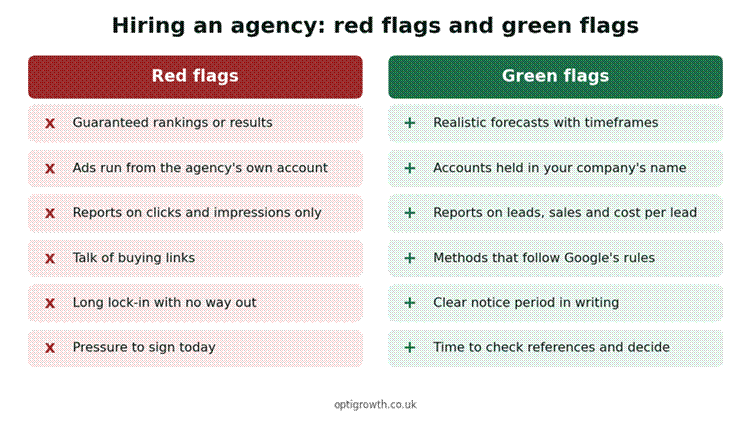
Figure 2: Red flags and green flags when hiring an agency
- Guaranteed rankings or results. Google says no one can guarantee a #1 ranking on Google.
- They run your ads from their own account. Google’s third-party policy says each end advertiser should have its own account.
- Vague answers on cost. Google asks partners to be open about services, costs and expected results.
- Reports full of clicks and impressions, with nothing on leads, sales or cost per lead.
- Talk of buying links. Google’s spam policies treat buying or selling links for ranking as link spam.
- Long lock-in terms with no performance review or way out.
- No written contract or data terms before work starts.
- Pressure to sign today with a discount that disappears tomorrow.
How much does a digital marketing agency cost in the UK?
ExpertSure’s UK pricing guide, updated in October 2026, uses agencies’ own published prices rather than surveys. Its monthly budget bands give a useful starting point when comparing marketing agencies in the UK.
| Monthly budget | What it usually buys (ExpertSure) |
| Under £500 | One channel, done properly |
| £500 to £2,000 | A full retainer or two channels |
| £2,000 and above | Multi-channel and specialist work |
| Service | Published monthly price (ExpertSure, October 2026) |
| SEO | £185 to £1,967 |
| PPC management | £145 to £1,200 at entry tier, plus ad spend |
| Content marketing | Usually quoted, with one published retainer at £2,967 |
| Organic social media | Usually quoted individually |
Two extra costs catch people out. Ad spend is paid on top of management fees, and UK agencies usually quote excluding VAT. If the agency is VAT-registered, expect 20% VAT on top.
Common agency pricing models
| Model | How it works | Watch out for |
| Monthly retainer | A fixed fee for an agreed scope each month | Scope creep, or a fixed fee with less work over time |
| Project fee | A set price for a defined job, such as a website | Changes priced after the project starts |
| Percentage of ad spend | The fee rises or falls with your budget | A built-in reason to raise spend |
| Performance-based | Payment linked to leads or sales | Disputes over what counts as a qualified lead |
Check the digital marketing agency contract before you sign
The contract decides what happens when things go well and when they do not. Read these clauses closely, and take legal advice if the sums are large.
| Clause | What to look for |
| Minimum term and notice | ExpertSure found most agencies that publish terms roll monthly, with 30 or 31 days’ notice |
| Ownership of work | Content, designs and code assigned to you in writing once paid |
| Account ownership | Ad, analytics and tag accounts held in your company’s name |
| Data processing | UK GDPR processor terms if the agency handles your customer data |
| Scope and extras | What is included each month, and how extra work is priced |
| Reporting | Which metrics, how often and in what format |
| Exit and handover | Access, files and data returned within a set time |
Why ownership of work needs to be in writing
Under UK law, the first owner of copyright is usually the person or business that created the work. That changes only if you agree otherwise in writing. So make sure the contract assigns content, designs and code to you.
UK GDPR terms when an agency handles your data
If an agency processes your customer data, such as email lists or CRM records, it acts as a processor. The ICO sets out what the contract must include under Article 28(3) of UK GDPR.
- Processing only on your documented instructions.
- Confidentiality for anyone who handles the data.
- Suitable security measures.
- Your approval before they use sub-processors.
- Help with data subject requests and breaches.
- Deleting or returning the data when the contract ends.
- Information and audits to show they comply.
Advertising rules and security
Under CAP Code rule 1.8, primary responsibility for following the Code falls on the marketer, which is you. Agencies also accept an obligation to follow it, but you should still approve claims in your ads.
If the agency will access your website or systems, ask about security. The NCSC calls Cyber Essentials the government’s recommended minimum standard of cyber security for all organisations.
Use a scorecard to compare digital marketing agencies in the UK
A simple scorecard stops the best presenter winning by default. Score each agency from 1 to 5 on each line, then multiply by the weight.
| Criterion | Weight | Agency A | Agency B | Agency C |
| Relevant proof in your channel and sector | 25% | |||
| Strategy for your goal and budget | 20% | |||
| Team, communication and fit | 15% | |||
| Reporting and lead tracking | 15% | |||
| Ownership, contract and data terms | 15% | |||
| Value for money | 10% | |||
| Weighted total (out of 5) | 100% |
Change the weights to match your priorities. A firm with strict data rules might give contract and data terms a higher weight.
What to expect in the first 90 days
A good agency start is busy but structured. Agree what success looks like at day 90 before work begins.
| Period | What should happen | What you should see |
| Days 1 to 30 | Access, audit, tracking checks and a written plan | An audit report and agreed targets |
| Days 31 to 60 | Launch or fix campaigns and pages | Early data and a first monthly report |
| Days 61 to 90 | Improve what works and cut what does not | A review against the targets you agreed |
Make sure tracking is right from day one. Our guide to B2B marketing attribution shows how to link leads to the channel that won the deal.
What good proof looks like: an example
Here is the level of detail to expect from any agency’s case study, using one of our own. It names the client, the channels, the timeframe and the results.
| Detail | Innovent case study |
| Client | A software development and digital transformation company |
| Markets | UAE, Europe and North America |
| Timeframe | Six months |
| Channels | Google Ads, SEO, LinkedIn outreach, AI automation and email |
| Results | 310+ qualified leads, 87 sales meetings and 42% lower cost per lead on paid search |
Innovent sells mainly outside the UK, so these figures show the method, not a UK benchmark. You can see more examples on our work page.
Common mistakes when choosing a marketing agency
- Choosing on price alone, without comparing what the fee includes.
- Hiring the pitch team, then meeting a different team after signing.
- Skipping reference calls with current clients.
- Letting the agency own your ad or analytics accounts.
- Signing without a written scope, notice period or data terms.
- Judging results after a few weeks, before campaigns have had time to work.
FAQs: how to choose a digital marketing agency
How do I choose the right digital marketing agency?
Knowing how to choose a digital marketing agency starts with one clear goal and budget. Then shortlist three to five agencies with proof in your channel and sector. Ask each the same questions, check references and the contract, and score them on a weighted scorecard.
How much does a digital marketing agency cost per month in the UK?
ExpertSure’s October 2026 guide groups UK agency budgets into three bands. Under £500 a month usually covers one channel, and £500 to £2,000 a full retainer or two channels. £2,000 and above buys multi-channel work, with ad spend and any VAT on top.
What questions should I ask a digital marketing agency?
Ask who will work on your account, what results they have delivered for similar businesses and how they report. Ask who owns the accounts and the work, what the fee includes and the notice period. Also ask how they handle your customer data under UK GDPR.
What are the red flags when hiring a marketing agency?
Walk away from guaranteed rankings, as Google says no one can guarantee a #1 ranking. Other red flags include agencies keeping your ad accounts, vague reports, link buying and pressure to sign. Missing contract or data terms are also a warning sign.
Should I hire a specialist or a full-service agency?
Hire a specialist if one channel drives most of your leads and you need depth there. Choose full-service if you need several channels run as one plan with one point of contact. Either way, check proof for each channel you buy.
How long should a marketing agency contract be?
ExpertSure found that most UK agencies that publish their terms roll monthly, with 30 or 31 days’ notice. Some agencies ask for a longer initial term for work like SEO. If you agree to one, add a performance review point and clear exit terms.
Who should own my Google Ads and Analytics accounts?
Your business should own them, in its own name, with the agency given access. Google’s third-party policy says each end advertiser should have its own account. That way, your data, campaign history and audiences stay with you if you change agency.
Talk to OptiGrowth about your marketing
OptiGrowth is a digital marketing agency based in Manchester, working with UK SMEs and B2B tech companies. We run SEO, Google Ads, social media and CRM tracking as one plan built around leads.
Now you know how to choose a digital marketing agency, put us through the 15 questions above. Our free marketing audit includes a 30-minute strategy call and a 90-day growth roadmap, with no obligation.
If you would rather talk first, contact our team directly.