SaaS SEO is the practice of ranking a software company’s website for the searches its buyers make. For B2B tech companies, the goal is qualified pipeline, not traffic. That means ranking for buying-intent keywords, earning citations in AI answers and tracking every organic lead in your CRM.
This guide sets out the six-step B2B SaaS SEO method we use with software clients. It runs from keyword research to measurement, with UK costs, UK rules and real results from two software engagements.
What is SaaS SEO?
SaaS SEO is search engine optimisation for software-as-a-service companies. It covers your product pages, use-case pages, comparison pages, help docs and blog. The aim is to reach buyers at every stage of research, then turn their visits into demos and trials.
In B2B, a software decision often involves several people with different questions. Good SEO gives each of them a page that answers their question.
How SaaS SEO differs from traditional SEO
Most SEO advice is written for local services or online shops. Software is different in several ways, shown in the table below.
| Factor | Traditional SEO | SaaS SEO |
| Main goal | Calls, visits or online sales | Demos, trials and qualified pipeline |
| Buyer | Often one person | A buying group, such as a founder, CTO and finance lead |
| Product | Easy to explain | Often technical, new or part of a new category |
| Key pages | Service, location and product pages | Feature, use-case, integration, comparison and pricing pages |
| Sales cycle | Days or weeks | Often weeks or months |
| Measurement | Calls, forms and sales | Leads matched to CRM pipeline and revenue |
Why B2B SaaS SEO matters in the UK in 2026
Three changes make organic search more important for UK software firms this year.
- More competition: the ONS counted 22,575 new information and communication businesses in the UK in 2024.
- More funded rivals: UK Private Capital reports £8bn of UK venture investment in 2025. Deeptech and AI took 63% of it.
- AI-first research: G2 surveyed 1,076 B2B decision-makers across North America, EMEA and APAC in March 2026. Of those, 51% now start software research in an AI chatbot more often than in Google.
AI tools have not replaced search. Google’s AI Overviews and AI Mode link to supporting web pages. Your goal is to be one of those pages.
SEO also keeps working when ad budgets pause, unlike paid search. Our guide to Google Ads vs SEO explains how the two work together.
How AI search changed SaaS SEO: GEO and AI Overviews
GEO, or generative engine optimisation, means making your content easy for AI tools to find, quote and cite. It builds on traditional SEO rather than replacing it, so the basics below still come first.
Google says there are no additional requirements to appear in AI Overviews or AI Mode. It also says there is no special schema to add. The same SEO basics apply to AI features and to normal results.
What Google’s AI features look for
Google says AI Overviews and AI Mode may use a technique called query fan-out. They run several related searches across subtopics to build one answer. So cover the follow-up questions a buyer would ask, not just the main one.
How to make SaaS pages easy for AI tools to cite
- Answer first: put a direct answer of two or three sentences under each heading.
- Use specific facts: give numbers, dates, prices and named standards, with a link to each source.
- Use tables for comparisons: feature, pricing and plan tables are easy to read and to quote.
- Name things consistently: use the same product, feature and company names on every page.
- Earn third-party mentions: reviews, partner listings and press coverage show who you are beyond your own site.
- Keep answers open: do not hide key information behind logins, forms or blocked scripts.
One 2026 change matters for SaaS sites that relied on FAQ markup. Google stopped showing FAQ rich results from 7 May 2026. FAQs still help readers, but they no longer earn a special search result.
The six-step SaaS SEO strategy
This strategy works as a loop, not a one-off project. Each step feeds the next, and sales insight feeds new keyword ideas.
- Keyword research built around buying intent, starting at the bottom of the funnel.
- Pages that answer each buying question, from features to pricing.
- Technical SEO so Google can crawl, render and index every important page.
- Content with original insight that earns trust, links and AI citations.
- Links and mentions from partners, original data and real expertise.
- Conversion and measurement that tie each organic visit to pipeline and revenue.
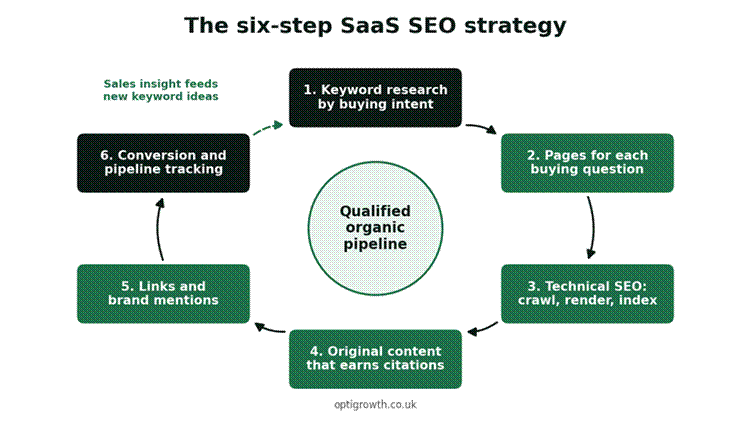
Figure 1: The six steps work as a loop, with qualified pipeline at the centre
Step 1: SaaS keyword research built around buying intent
Good SaaS keyword research starts with the searches closest to a buying decision. These often have low volume, but the searcher is already comparing options. Then work up the funnel towards higher-volume, earlier-stage searches.
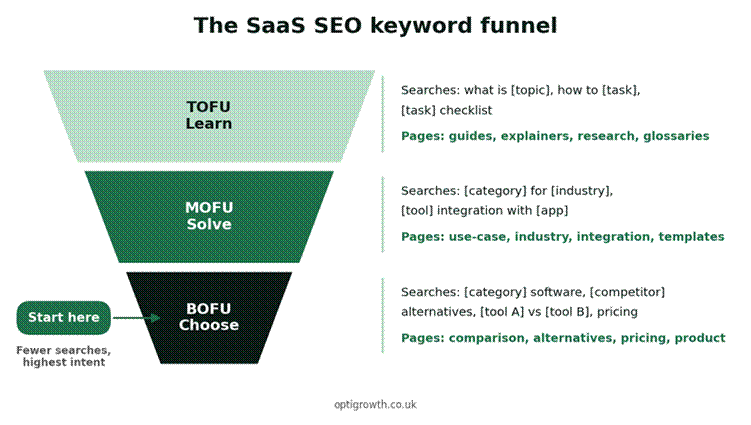
Figure 2: Start keyword research at the bottom of the funnel
The SaaS keyword funnel: BOFU, MOFU and TOFU
| Stage | What the buyer wants | Keyword patterns | Best page type |
| BOFU (bottom) | To choose a tool | [category] software, [competitor] alternatives, [tool A] vs [tool B], [category] pricing | Comparison, alternatives, pricing and product pages |
| MOFU (middle) | To find a way to solve a problem | [category] for [industry], [tool] integration with [app], how to automate [task] | Use-case, industry, integration and template pages |
| TOFU (top) | To understand a problem or topic | what is [topic], how to [task], [task] checklist | Guides, explainers, research and glossaries |
Where to find SaaS keywords that bring demos
- Sales calls: note the exact words buyers use to describe their problem.
- Lost deals: list the competitors you lost to, then plan comparison pages.
- Support tickets: find the setup and integration questions people ask before buying.
- Google Search Console: look for queries where you already rank on page two.
- Competitor sites: check which comparison and integration pages they have built.
Integ Consulting, a US software company serving utilities, shows how this works. We mapped informational and buying searches, such as ‘What is NERC GADS reporting?’ and ‘best analytics software for utilities’. We then optimised the matching solution pages and planned blog topics around them.
Step 2: Build the SaaS pages that turn searches into demos
Many SaaS websites have little more than a homepage, a features page and a blog. That leaves many buying questions with no page to rank. Build a page for each question your buyers ask before a demo.
| Page type | Buyer question it answers | What to include |
| Feature pages | Can it do this specific job? | One feature per page, screenshots, limits and setup steps |
| Use-case pages | Will it solve my problem? | The problem, the workflow, the result and a customer example |
| Industry pages | Does it work for firms like mine? | Sector terms, rules that apply and relevant integrations |
| Integration pages | Does it work with my tools? | What syncs, setup steps and any plan limits |
| Comparison pages | How does it compare with X? | A fair feature table, the pricing basis and the date checked |
| Alternatives pages | What else should I consider? | Honest options, who each one suits and why buyers switch |
| Pricing page | What will it cost us? | Plans, what each includes and what changes the price |
Comparison and alternatives pages: keep them fair
Comparison searches come from buyers who are close to a decision. In the UK, these pages also carry risk if claims are wrong or out of date.
The CAP Code covers marketing claims on your own website. The ASA says comparisons with identifiable competitors must be verifiable, so readers can check them. Date every comparison, link to your sources and review the page when prices change.
Pricing pages: show what drives the price
Pricing searches are some of the most valuable bottom-of-funnel keywords. If you cannot publish prices, explain what changes the price and give a starting point. A page with no pricing detail gives buyers and AI tools nothing to compare.
Every page also needs a clear next step and a fast form. Our web design team builds SaaS sites around this page structure.
Step 3: Fix technical SEO for SaaS websites
Many SaaS sites are built with JavaScript frameworks. If Google cannot render a page properly, it will struggle to rank it. Fix the issues below before you scale up content production.
Google processes JavaScript in three phases: crawling, rendering and indexing. Google says server-side rendering or pre-rendering is still a great idea. It makes pages faster and helps bots that cannot run JavaScript.
| Issue | What goes wrong | Fix |
| Client-side rendering only | Content and links depend on rendering, and some bots see a blank page | Use server-side rendering or pre-rendering for marketing pages |
| Links without <a href> | Google cannot discover the linked pages | Use <a> elements with an href attribute |
| Soft 404s in single-page apps | Error pages return a 200 status and can be indexed | Redirect to a URL that returns a 404, or add a noindex tag |
| Login and app pages indexed | Thin pages compete with your real landing pages | Add noindex to login, sign-up and in-app pages |
| UK and US versions | Google shows the wrong version or currency | Use hreflang, such as en-gb and en-us, plus an x-default |
| Slow pages | Poor page experience for users | Aim for LCP within 2.5 seconds, INP under 200 ms and CLS under 0.1 |
Those speed targets come from Google’s Core Web Vitals guidance. Google says good page experience aligns with what its core ranking systems seek to reward.
If you sell in both the UK and the US, read Google’s guide to localised versions of your pages. Its own example uses separate en-gb and en-us pages with prices in pounds and dollars. Also check that robots.txt does not block CSS, JavaScript or key pages.
Step 4: Create SaaS content that earns trust and citations
Google asks whether your content provides original information, reporting, research or analysis. For SaaS firms, that is easier than it sounds. You hold product data, customer stories and expert knowledge that no one else has.
Sources of original SaaS content
- Product data: aggregated, anonymised usage trends, such as the most common workflows.
- Customer results: before-and-after numbers, shared with the customer’s permission.
- Engineer input: setup steps, limits and edge cases from the people who built the feature.
- Sales insight: the objections and questions that come up on demo calls.
- UK detail: rules, standards and costs that US-written guides leave out.
What every SaaS article needs to rank and convert
- A direct answer to the main question in the first two sentences.
- One clear search intent and one focus keyword per page.
- Original data, examples or screenshots that other pages do not have.
- A linked source for every statistic, ideally the original publisher.
- A next step that fits the reader’s stage, such as a template, a demo or an audit.
- A visible last-updated date, refreshed when facts change.
Programmatic SEO and AI writing: where the line is
Programmatic SEO means building many pages from one template and a data set. SaaS firms use it for integration, template and comparison pages. It works when each page has unique, useful detail, such as real setup steps for each integration.
Google’s spam policies define scaled content abuse as generating many pages mainly to manipulate rankings. One listed example is using generative AI to make many pages without adding value for users. Use AI to speed up research and drafts, then add real expertise before you publish.
Our explainer on what an AI digital marketing agency does covers where AI helps and where people still matter.
Step 5: SaaS link building and brand mentions
Links from relevant, trusted sites still help new pages rank in Google. For SaaS firms, the best links usually come from partners, original data and genuine expertise.
| Tactic | How it works | Watch out for |
| Integration partner listings | Get listed in the app directories of tools you connect with | Keep listings accurate as features change |
| Original research | Publish survey or product data that journalists and bloggers can cite | Explain your method and sample size |
| Review platforms | Ask real customers to review you on sites such as G2 and Capterra | Never write, buy or hide reviews |
| Expert commentary | Offer founders and engineers as sources for journalists and podcasts | Give useful insight, not a sales pitch |
| Guest articles | Write for publications your buyers read | Avoid paid links placed only for rankings |
Two sets of rules apply to reviews and links. The CMA’s fake reviews guidance covers fake reviews and incentivised reviews that are not disclosed. Google’s spam policies treat buying or selling links for ranking purposes as link spam.
Step 6: Turn organic visitors into qualified pipeline
Rankings only matter if visitors take the next step. Match each call to action to the page’s stage in the funnel.
| Page stage | Best call to action | Why it fits |
| BOFU pages | Book a demo or start a trial | The visitor is choosing a tool |
| MOFU pages | See how it works, get a template or watch a short video | The visitor wants proof before talking to sales |
| TOFU pages | Download a checklist or join the newsletter | The visitor is still learning |
- Keep demo forms short, and ask only what sales needs to qualify the lead.
- Add a calendar booking step so leads can choose a time straight away.
- Show proof near every form, such as a case study figure.
- Send every form fill to your CRM with its source and landing page.
Our conversion rate optimisation and CRM and call tracking services cover this step. SEO also works best alongside outbound, as our LinkedIn lead generation guide explains.
How to measure SaaS SEO: pipeline, not traffic
Traffic is easy to report and easy to misread. Judge an SEO programme on qualified leads, pipeline and revenue from organic search.
| Metric | What it tells you | Where to find it |
| Non-brand clicks | Whether new buyers are finding you | Google Search Console |
| BOFU keyword positions | Whether you rank where buying decisions happen | Search Console or a rank tracker |
| Organic demo and trial requests | Whether visits turn into leads | GA4 key events and your CRM |
| Organic SQLs | Whether those leads fit your ideal customer | Your CRM |
| Organic pipeline value | The revenue those leads could bring | Your CRM |
| Organic closed revenue | What SEO actually earned | Your CRM and finance data |
Note that Google includes clicks from AI Overviews and AI Mode in the overall Web figures in Search Console. So your Search Console totals already include AI feature traffic.
Track real conversions, not clicks
Integ’s first tracking setup counted button clicks and page views as conversions. That made it hard to judge which leads were real buyers. We recommended tracking confirmed demo bookings instead, through a booking tool and Google Tag Manager.
UK cookie consent and SEO reporting
Under PECR, non-essential cookies need consent unless an exception applies. The ICO describes an exception for statistical purposes that covers aggregate data used to improve your site. Users must get clear information and a simple, free way to object.
The ICO says this exception does not allow you to track individual visitors. So expect gaps in your analytics data when visitors decline cookies. A ‘How did you hear about us?’ field on demo forms helps fill them.
How long does SaaS SEO take?
There is no fixed timeline, as results depend on your starting point, competition and pace of work. Our own engagements show what early results can look like.
- Integ Consulting: organic traffic to key product pages rose 15% in the first 30 days. All new blog content was indexed and average session duration rose by about 27%.
- Innovent: organic traffic grew 128% over six months. The site reached page one for 45 keywords, with 18 high-intent keywords in the top three.
- A separate client site: starting from almost no visibility, organic clicks rose from 10 to 699 in one quarter.
Integ and Innovent sell mainly outside the UK. Treat these figures as proof of the method, not as UK benchmarks.
| Period | Main work | What to watch |
| Months 1 to 3 | Technical fixes, keyword map, first BOFU pages, tracking set-up | Pages indexed and impressions rising in Search Console |
| Months 4 to 6 | MOFU pages, integration pages, links and partner listings | BOFU positions and the first organic demo requests |
| Months 7 to 12 | Content refreshes, original research and conversion tests | Organic SQLs, pipeline and cost per lead against paid search |
How much does SaaS SEO cost in the UK?
ExpertSure’s UK pricing guide, updated in October 2026, compared agencies’ published prices. It found SEO retainers from £185 to £1,967 a month, with local packages at the bottom. One content-led retainer started at £2,967 a month.
The sample is small, at four agencies, so use it as a sense check rather than a benchmark. These factors move a quote up or down:
- The number of pages you need, such as comparison, integration and use-case pages.
- How much technical work your site needs, especially on JavaScript frameworks.
- Who writes the content, and how much expert input it needs.
- Whether link building and digital PR are included.
- Whether the agency also handles conversion work and CRM reporting.
SaaS SEO agency, in-house team or hybrid?
| Option | Works best when | Trade-off |
| In-house team | You publish often and need daily product knowledge | Hiring takes time, and one person rarely covers every skill |
| SaaS SEO agency | You need strategy, technical SEO and links quickly | The agency needs regular access to your product experts |
| Hybrid | You have a writer but no SEO lead | Clear ownership is needed to avoid gaps |
If you want a partner, our SEO agency for UK businesses works with SaaS and technology companies.
Case study: SEO results from two B2B software engagements
Innovent: software development and digital transformation
Innovent sells custom software, cloud and digital transformation services in the UAE, Europe and North America. Its growth relied almost entirely on referrals, with low visibility for commercial keywords. Over six months, we ran a technical audit, on-page and content work, internal linking and link building.
| SEO metric (six months) | Result |
| Organic traffic growth | +128% |
| Keywords ranked on page one | 45 |
| High-intent keywords in the top three | 18 |
| Inbound enquiries | +72% |
Integ Consulting: compliance and AI software for utilities
Integ is a US enterprise software firm that sells compliance, analytics and AI tools to utilities. Its products include PowerGADS, which automates NERC GADS reporting for power generators. We mapped keywords by intent, optimised key solution pages and added schema, internal links and better meta titles.
| SEO metric (first 30 days) | Result |
| Organic traffic to key product pages | +15% |
| New blog content indexed | All |
| Average session duration | About +27% |
See more client results on our work page, or read our lead generation playbook for software companies.
Your first 90 days: a step-by-step plan
Days 1 to 30: fix and plan
- Run a technical audit and fix rendering, indexing and speed issues.
- Build a keyword map by funnel stage, starting with BOFU.
- Set up demo and trial tracking in GA4 and your CRM.
- Publish or rewrite your three most important BOFU pages.
Days 31 to 60: build
- Publish comparison, alternatives and integration pages for your main competitors and tools.
- Add answer-first sections, tables and sources to key pages.
- Start partner listings and review requests from real customers.
Days 61 to 90: grow and measure
- Publish MOFU use-case and industry pages for your two most valuable segments.
- Pitch one piece of original research or expert comment.
- Review organic leads, SQLs and pipeline, then adjust the plan.
Common SaaS SEO mistakes to avoid
- Chasing high-volume TOFU keywords before your BOFU pages exist.
- Writing feature pages that describe the feature but not the job it does.
- Leaving marketing pages dependent on client-side JavaScript.
- Publishing comparison pages with claims nobody can check.
- Publishing large batches of AI-written pages with no original value.
- Reporting traffic instead of demos, SQLs and pipeline.
- Copying US advice on costs, cookies and reviews without checking UK rules.
Frequently asked questions about SaaS SEO
What is SaaS SEO?
SaaS SEO is search engine optimisation for software-as-a-service companies. It ranks your product, comparison, integration and content pages for the searches your buyers make at each stage. For B2B tech firms, success means more demos, qualified leads and pipeline from organic search, not just more traffic.
How is SaaS SEO different from regular SEO?
SaaS SEO targets buying groups with long sales cycles, not single buyers making quick decisions. It relies on feature, use-case, integration, comparison and pricing pages, plus strong technical SEO for JavaScript sites. Success is measured in demos, SQLs and pipeline rather than calls or online sales.
Which keywords should a SaaS company target first?
Start with bottom-of-funnel keywords, such as ‘[category] software’, ‘[competitor] alternatives’ and ‘[tool] pricing’. They have lower search volume, but the searcher is already comparing tools and close to a demo. Then move to use-case, integration and industry keywords, and leave broad guides until later.
How long does SaaS SEO take to work?
There is no fixed timeline, because it depends on your site, your competition and your pace of work. For Integ Consulting, organic traffic to key product pages rose 15% in the first 30 days. For Innovent, organic traffic grew 128% over six months, with 45 keywords on page one.
How much does SaaS SEO cost in the UK?
ExpertSure’s October 2026 UK guide found published SEO retainers from £185 to £1,967 a month, based on four agencies. Local packages sit at the bottom of that range. Costs for SaaS depend on page volume, technical work, content depth and link building.
Does SaaS SEO still work with AI Overviews?
Yes, because Google says AI Overviews and AI Mode need no extra requirements or special schema. These features link to supporting web pages, so normal SEO basics still apply. Clear answers, comparison tables and cited facts make your pages easier for AI tools to quote.
Should we hire a SaaS SEO agency or build an in-house team?
Hire an agency if you need strategy, technical SEO and links in place quickly. Build in-house if you publish often and need daily access to product experts. A hybrid also works, with an agency leading strategy and an in-house writer adding product detail.
Get a free SaaS SEO audit
OptiGrowth is an AI digital marketing agency based in Manchester. We run SaaS SEO for UK B2B tech companies, from technical fixes to content that brings demos.
Our free marketing audit includes a 30-minute strategy call and a 90-day growth roadmap, with no obligation. For the wider picture, read our SaaS marketing guide or see our SaaS marketing agency page.
If you would rather talk first, contact our team directly.